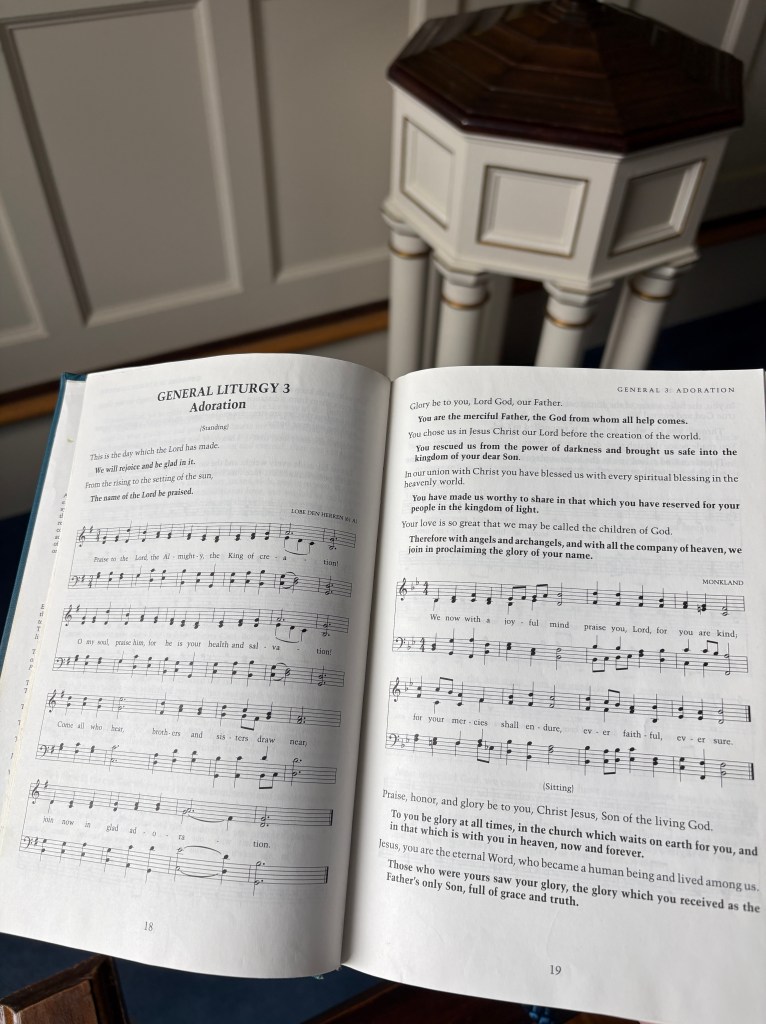
You open the door to that old church building down your street, and the sound of an organ begins to trickle out onto the street. Maybe you can smell the faint hint of some Maxwell Coffee House percolating away as you walk into the big room called the sanctuary. Your eyes scan the space as you wonder which spot on which pew you should claim as your spot. Hopefully someone with a name tag and a warm smile greets you and maybe even hands you a paper they call a “bulletin.” You finally decide on where you want to sit, and you notice there is a big book in front of you labeled the “Moravian Book of Worship.” As the service begins, the pastor invites everyone to “turn to our liturgy for discipleship,” and suddenly folks around you are speaking words written in bold out loud, even singing at random times. You find yourself thinking–
“What exactly is a liturgy?”
Literally speaking, the English word “liturgy” comes from an ancient Greek term that was used to convey the idea of “a work of the people.” So a liturgy is actually anything that a group of people, gathered together for religious community, do together, publicly, as an act of worship. It can include • singing, • communal prayer spoken aloud, • baptism, • holy communion, • chanting, • silent prayer, • confession of sins, • laying on of hands, • collection or blessing of offerings, • reading scripture, • preaching, • prayers read from a book or even prayers spoken extemporaneously by a leader or anyone in a group, and much more. Often, churches in the Protestant Mainline or of Catholic and Orthodox origins are labeled “liturgical” churches in comparison to some who embrace a more contemporary style of worship, but if there is a rhythm to your worship, meaning if you move from one posture of worship to the next (say, singing a few songs, then praying, then reading scripture together, etc.), then you are using liturgy!
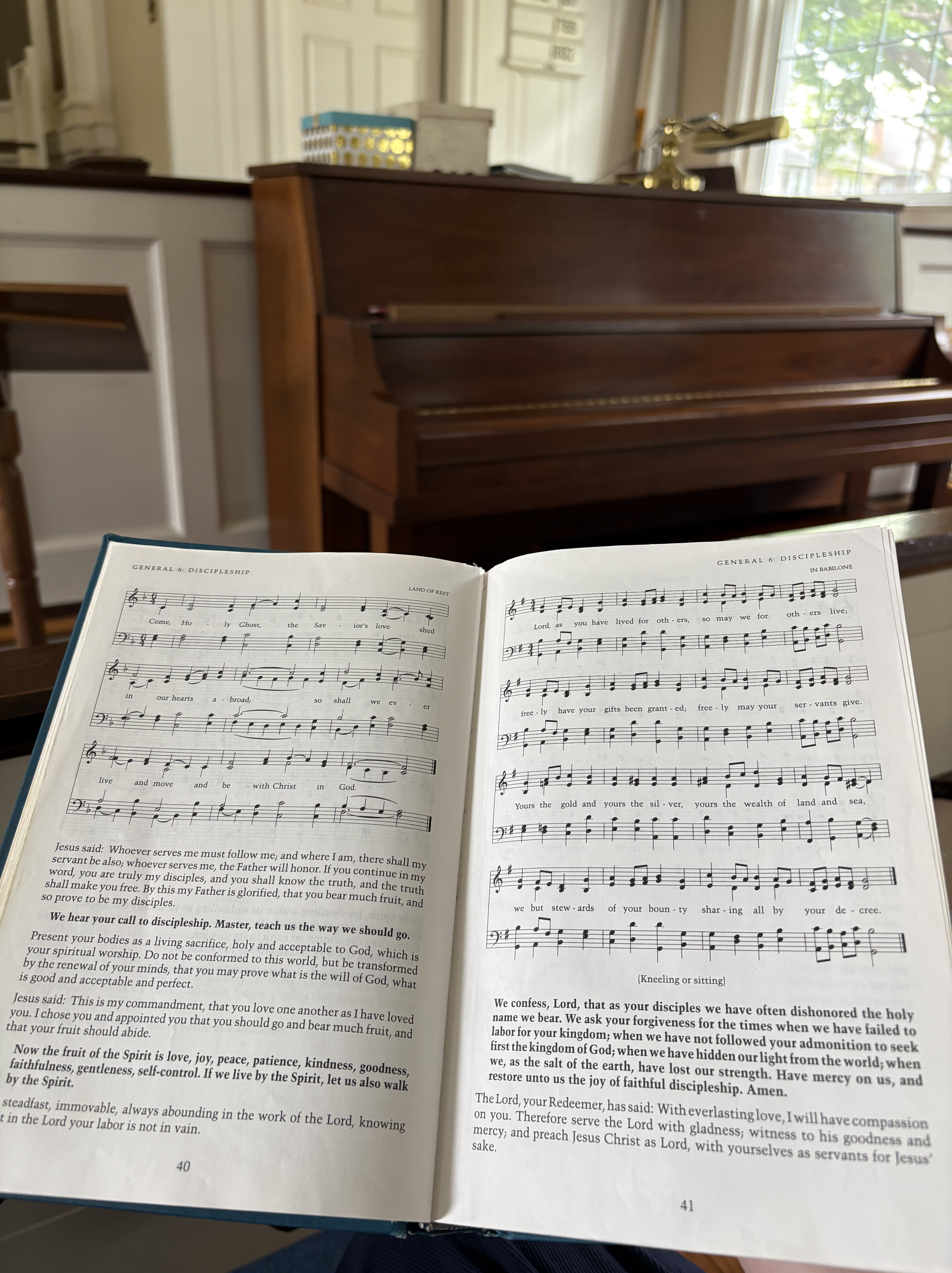
Plain and simple, a liturgy is a sort of like a map for a worship service or gathering. A liturgy should name and express what a church believes as well as its mission. And it should also invite all who hear the words to take up the universal call of every believer: to serve together with care and concern for the needs of the world. For churches like Calvary, who often pray written liturgies that are compiled with a specific theme or for a certain time of the church year, often having been passed down through generations of believers, our liturgies help guide us through prayers, songs, confessions, and communal responses that we get to pray together, aloud or quietly, as an act of our worship. Many of the liturgies we use in our worship services have ancient roots, often coming directly from scripture and creeds shared by many traditions within Christianity.
So, if any form of worship that has a rhythm to it and is done in community–while also expressing what a church believes and calling those who pray it to participate in their collective mission–can be considered a liturgy, then why do we at Calvary use written liturgies?
Calvary Moravian continues to pray some of our most beloved liturgies every Sunday for a few reasons:
- They connect us to the “great cloud of witnesses” (Hebrews 12:1): Many of our written liturgies include creeds like the Nicene Creed and Apostles’ Creed, along with passages of scripture, and other writings that have been read, spoken, and prayed by other people of faith for centuries. When we gather together and pray them again, we are joining our prayers with the others across time.
- They help us find the words when it is hard to know what to say when we gather together to worship God: Sometimes, it is hard to know what you want to say to God. Maybe a particular tragedy has recently struck your community, maybe it is a specific time of year, or maybe life has just been a roller coaster and you aren’t sure which way is up and which way is down anymore. These liturgies offer us some words to say when we aren’t sure what to pray.
- They ground us in the ancient roots of our faith that remains full of modern and contemporary promise and hope: Many of our written liturgies are ones Moravians have been praying for decades, if not centuries. And yet, even with their deeply ancient roots, they often remain timeless, expressing our belief as a church in the Good News of Jesus’ resurrection and calling us forward in the mission to be the body of Christ in our present moment.
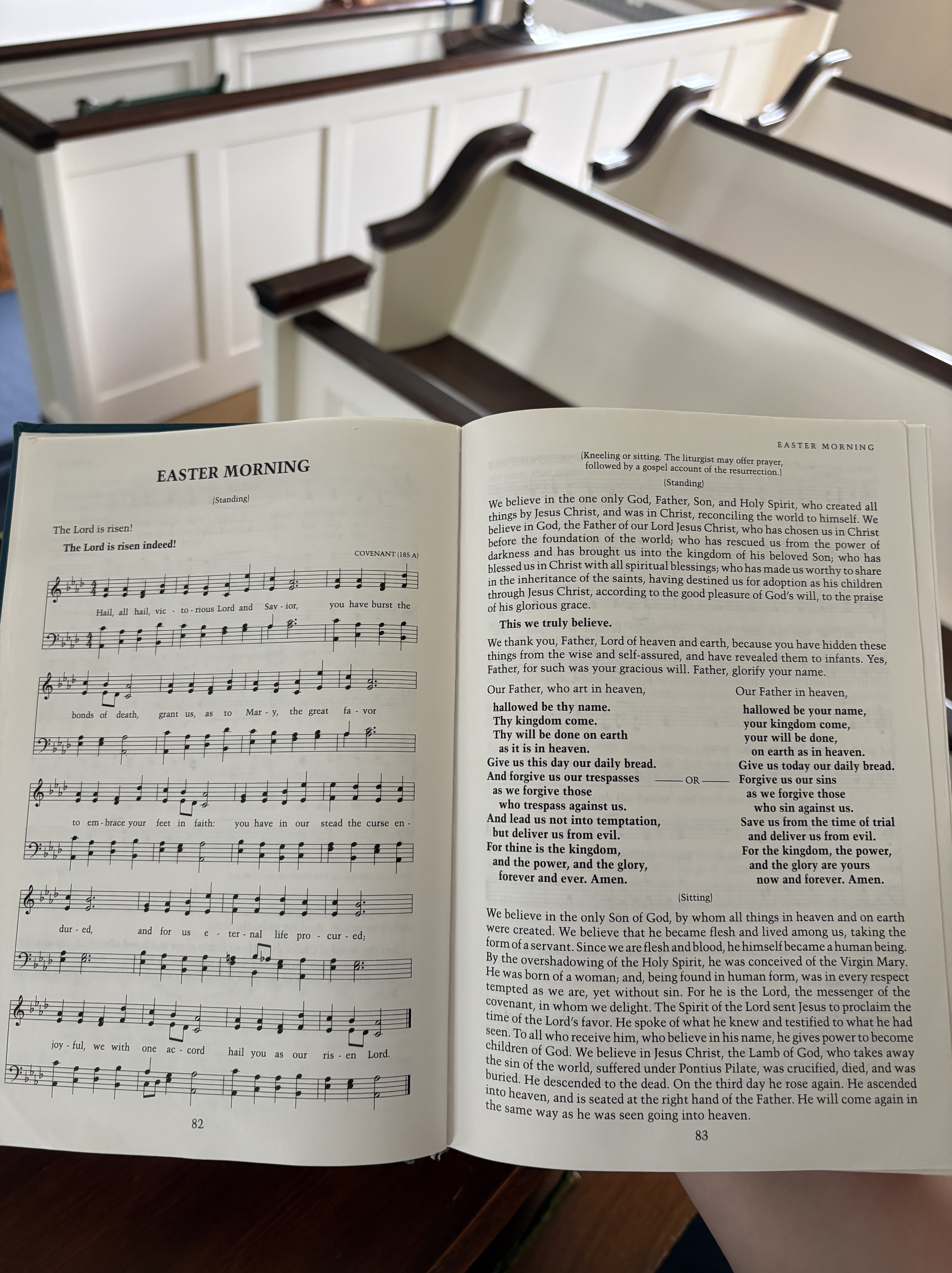
Sometimes, the liturgies we pray together are ones believers have been praying for centuries, in some form or fashion, like our Easter Morning liturgy or the Church Litany (which is our great prayer of intercession). But sometimes, we will also pray liturgies that have been written only very recently, maybe even by members of our community. Regardless of when a particular liturgy was written, as we pray them together each Sunday, expressing to God and one another our collective belief and commitment to our mission, they are just one of the many ways we here at Calvary come in faith, go with peace, and live God’s love.
Curious to read some of the other Moravian liturgies we pray throughout the year? Click here to access some digital copies!

